The Dual Diploma Program: Program and Courses
In Williamsburg Christian Academy’s Dual Diploma program, we count the math, science, world language, and elective credits that your cohort of students have earned during their high school careers and count them towards their WCA transcript and high school diploma because we enroll Dual Diploma Program participants officially as WCA learners. Over the course of two consecutive summers, each Dual Diploma cohort takes four credits each summer for a total of eight credits earned either on-site at Williamsburg Christian Academy, or through our fully remote or hybrid programs. The eighth and final credit is an independent thesis project that each candidate for graduation must complete at least one month before their high school commencement. During the third summer of each cohort, Williamsburg Christian Academy’s Head of School will present each graduate with a WCA diploma at the cohort’s high school commencement in their home country. Dual Diploma Program credits, spread over two consecutive summers in the United States, include the following academic components and are taught by WCA faculty:
 Credit Hours: 1.0 (140 Hours classroom time) -- YEAR 1
Students will explore the historical development of people, places, and patterns of life from ancient times until 1500 a.d. (c.e.) in terms of the impact on Western civilization. The study of history rests on knowledge of dates, names, places, events, and ideas. Historical understanding, however, requires students to engage in historical thinking, raise questions, and marshal evidence in support of their answers while understanding the nature of the cause-and-effect relationship in history. Students engaged in historical thinking draw upon chronological thinking, historical comprehension, historical analysis and interpretation, historical research, and decision-making. These skills are developed through the study of significant historical substance from the era or society being studied. The purpose of the language arts department of Williamsburg Christian Academy is to develop fluent, lifelong learners, and critical thinkers that use the filter of a Christian worldview to evaluate forms of written communication. The students will communicate effectively in verbal and written form using appropriate grammar, spelling, and syntax. Students will also demonstrate personal accountability for words and expressions. This course is an overview of world literature, with an emphasis on critical reading and analysis. Students develop writing skills focused on expository and persuasive writing. The study of specialized vocabulary for reading and writing prepares the student for the PSAT and SAT. High school students use the American Psychological Association (APA) documentation style for all research and writing assignments. APA style prepares high school students for the standards of writing and research that will be required of them in colleges, graduate schools, and their careers.
Ancient Times
How are civilizations created and how do they evolve?
● APA Formatting
● Fertile Crescent, Phoenicians
How does the development of a written language contribute to communities?
● Greece/Rome
How are governments created, structured, and maintained?
● Europe (Middle Ages)
● Mayans, Aztec, Inca
● Native Americans
 Credit Hours: 1.0 (140 Hours classroom time) -- YEAR 2
United States History (1600AD- 1970AD) expands upon the foundational knowledge and skills students have been developing to include the historical development of American ideas and institutions from the Age of Exploration to the present. While continuing to focus on political, geographic, and economic history, the course provides students with a basic knowledge of American culture through a chronological survey of major issues, movements, people, and events in United States history. As a foundation to develop historical thinking skills, students will apply social science skills to understand the challenges facing the development of the United States. These skills will support the investigation and evaluation of the fundamental political principles, events, people, and ideas that developed and fostered our American identity and led to our country’s prominence in world affairs.
What are the benefits of learning another culture’s history?
● US American Colonies
● US Revolution
● Civil War
● Westward Expansion
● Industrialization
● Gilded Age
● WWI
● WWII
● Cold War
● Civil Rights
 Credit Hours: 0.5 (70 Hours classroom time) -- YEAR 1 and 2 (0.25 credit per year)
English as a Second Language (ESL) is a course that supports students’ development of English skills through individualized instruction that is relevant to their courses at WCA. Students will receive targeted support to develop their reading comprehension, writing skills, vocabulary, pronunciation, and colloquial speech. All instruction enhances students’ ability to thrive in the dual diploma program courses.
Pre-assessment
● Individualized Instruction
● Colloquial Speech
● Written Communication Formats
● Targeted Support for Fluency, Pronunciation, and Reading Comprehension
 Credit Hours: 1.0 (140 Hours classroom time) -- YEAR 2
Students need a strong foundation in civics, economics, and personal finance to function effectively as consumers, workers, savers, investors, entrepreneurs, and active citizens. The Civics, Economics and Personal Finance course presents economic concepts that help students interpret the daily news, understand how interdependent the world’s economies are, and anticipate how certain events will impact their lives. The understanding of how economies and markets operate and how the United States’ economy is interconnected with the global economy prepares students to be more effective participants in the workplace. On a personal level, students learn that their own human capital (knowledge and skills) is their most valuable resource and that investing in education and training improves the likelihood of their future economic success. They will also identify personal character traits such as patriotism, respect for the law, willingness to perform public service, and a sense of civic duty, that facilitate thoughtful and effective active participation in the civic life of an increasingly diverse democratic society.
● American Financial Systems
● Banking
● Investing
● Budgeting
● Taxes and Insurance
● Retirement
● Paycheck and Income
● Personal Living
 Credit Hours: 1.0 (140 Hours classroom time) -- YEAR 1
This course will introduce students to the Ancient Near East world of the Old Testament. Hence, students will learn about the customs and cultures that form the background of the Old Testament world, as well as the basic organization and ideas of the Old Testament. There will be several connections made to the New Testament and the contemporary world to train students' analytical thinking skills.
● Who is God and how did/does He reveal himself to us?
● How do we see Christ in the Old Testament?
● What is the biblical metanarrative and how do we fit into the story?
 Credit Hours: 1.0 (140 Hours classroom time) -- YEAR 2
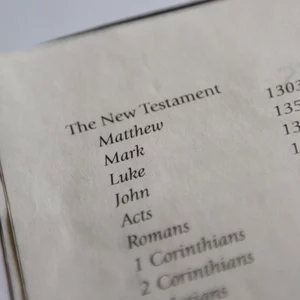
This course will introduce students to the Greco-Roman world of the New Testament.
Hence, students will learn how to read the New Testament in its original context and the theological
issues that it addresses. Students will learn about the core elements of a biblical worldview as found in
the New Testament.
● The Historical Jesus: what He said, did, and how His life changed the world
● How does the Gospel shape our lives? (Orthopraxy)
 Credit Hours: 0.5 (70 Hours classroom time) -- YEAR 2
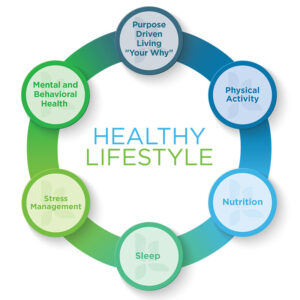
This course is designed to continue to provide students the opportunity to learn fitness concepts and conditioning techniques used for obtaining optimal physical fitness. Students will benefit from comprehensive weight training and cardiorespiratory endurance activities. Students will learn the fundamentals of strength training, aerobic training, and overall fitness training and conditioning. Course includes both lecture and activity sessions. Students will be empowered to make wise choices, meet challenges, and develop positive behaviors in fitness, wellness, and movement activity for a lifetime.
● Nutrition
○ What are the key components of a healthy, balanced diet?
○ How does our nutrient intake directly correspond to the operation and maintenance of our body?
● Body systems
○ What are the key body systems that allow our body to function properly?
○ What role does each body system play?
● Basic Human Anatomy
○ How have our organs been divinely arranged to ensure efficiency of operation?
● Basic Muscle Physiology
○ What do our muscles need to operate efficiently?
○ How does each muscle work individually and how do these individual pieces fit together to result
in movement of extremities?
● Differences between physical activity, exercise, and sport
○ What is the definition of physical activity?
○ What is the definition of exercise?
○ What is the definition of sport?
○ How do each of these paradigms present themselves in daily life?
● Recommendations for obtaining health/mental benefits Vs. weight loss
○ How can one individualize a nutrition and exercise plan to maximize their desired outcomes?
○ How can one determine their health goals?
● Exploration of popular world sports
○ What are the rules and terminology used in various sport activities?
● Different forms of exercise (cardio, strength, HIIT)
○ What is the difference between cardiovascular health and muscular health?
○ What is the difference between strength and fitness?
○ How can we use different forms of exercise to maximize our health gains?
 Credit Hours: 1.0 (140 Hours classroom time)
Visual Arts (Year 1)
Six-week course for immersive summer courses:
Visual Arts Essential Beginnings
Ice Age 30,000 BC Beginnings of Art as communication origins
Explore symbols in caves from a wide range of European cave art. Compare and connect
modern symbol usage. How do we communicate today with written and drawn messages vs.
oral language?
1500 BC-500 AD World Cultural Art development
Focus on artistic achievements of this time period, including cathedrals, stained glass, clothing, sculpture,
use of linen and parchment as written language and art. How did Egyptians express themselves in
these areas? How did Romans differ? How did the arts, architecture, and skill influence the unification
of the Chinese Qin Dynasty?
500AD-1600AD First People of the Americas
Explore artwork as communication, identity, sacred objects, functional objects, clothing, and
architecture.
How do different tribes and nations differ in their use of art to create the above items?
1600AD- 2023 European, Latin American, and African influences in American Art
Explore the rich tapestry of American Art. How did migration lead to artistic
Diversity? How did cultural appropriation alter art styles? What measures are being taken by museums
and galleries nationwide to celebrate differences in art?
The Future of Art
Study NFTs and how they change art currency, distribution, and valuation. What are the newest
careers in the arts? How do our phones change our perception of reality artistically?
● Ice Age (10-30,000 BC)
● Ancient Greece
● 1500 BC - 500AD: Phoenicians, Rome, Egypt
● 100BC - 1500AD: Aztec, First Nations
● 1900AD - Present: American Impressionism, Latin American Influences, World Cultural Pop Art)
Performing Arts: Drama & Music (Year 1)
● Individualized Instruction
● Music Theory
● Scene Analysis
● Vocal Health
● Composition
● Performance
Credit Hours: 1.0 (140 Hours classroom time) ***completed independently during senior year
The Program's final requirement is the senior thesis, a comprehensive paper written on a pre-selected subject with supporting evidence and arguments in the same format typically required of college and university's major paper assignments.
Earned Credit Requirement
One high school credit in Virginia equals one hundred forty clock hours. One-half standard
diploma high school credit in Virginia equals seventy clock hours.
When auditing each DDP learner’s math, science, world language, and elective courses taken throughout high school, coupled with the classes taken over a two-summer period at Williamsburg Christian Academy, twenty-six specific credits must be satisfied in order for a learner to earn an Advanced Studies Diploma. For additional questions on Commonwealth of Virginia high school graduation requirements, please refer to the link below:
The Dual Diploma Program: Program and Courses
In Williamsburg Christian Academy’s Dual Diploma program, we count the math, science, world language, and elective credits that your cohort of students have earned during their high school careers and count them towards their WCA transcript and high school diploma because we enroll Dual Diploma Program participants officially as WCA learners. Over the course of two consecutive summers, each Dual Diploma cohort takes 3.5 credits each summer for a total of seven credits earned either on-site at Williamsburg Christian Academy, or through our fully remote or hybrid programs. The eighth and final credit is an independent thesis project that each candidate for graduation must complete at least one month before their high school commencement. During the third summer of each cohort, Williamsburg Christian Academy’s Head of School will present each graduate with a WCA diploma at the cohort’s high school commencement in their home country. Dual Diploma Program credits, spread over two consecutive summers in the United States, includes the following academic components and are taught by WCA faculty:
Credit Hours: 1.0 (140 Hours classroom time)
United States History expands upon the foundational knowledge and skills students have been developing to include the historical development of American ideas and institutions from the Age of Exploration to the present. While continuing to focus on political, geographic, and economic history, the course provides students with a basic knowledge of American culture through a chronological survey of major issues, movements, people, and events in United States history. As a foundation to develop historical thinking skills, students will apply social science skills to understand the challenges facing the development of the United States. These skills will support the investigation and evaluation of the fundamental political principles, events, people, and ideas that developed and fostered our American identity and led to our country’s prominence in world affairs.
Credit Hours: 0.5 (70 Hours classroom time)
English as a Second Language (ESL) is a course that supports students’ development of English skills through individualized instruction that is relevant to their courses at WCA. Students will receive targeted support to develop their reading comprehension, writing skills, vocabulary, pronunciation, and colloquial speech. All instruction enhances students’ ability to thrive in the dual diploma program courses.
Credit Hours: 1.0 (140 Hours classroom time)
Students need a strong foundation in civics, economics, and personal finance to function effectively as consumers, workers, savers, investors, entrepreneurs, and active citizens. The Civics, Economics and Personal Finance course presents economic concepts that help students interpret the daily news, understand how interdependent the world’s economies are, and anticipate how certain events will impact their lives. The understanding of how economies and markets operate and how the United States’ economy is interconnected with the global economy prepares students to be more effective participants in the workplace. On a personal level, students learn that their own human capital (knowledge and skills) is their most valuable resource and that investing in education and training improves the likelihood of their future economic success. They will also identify personal character traits such as patriotism, respect for the law, willingness to perform public service, and a sense of civic duty, that facilitate thoughtful and effective active participation in the civic life of an increasingly diverse democratic society.
Credit Hours: 1.0 (140 Hours classroom time)
Students will explore the historical development of people, places, and patterns of life from ancient times until 1500 a.d. (c.e.) in terms of the impact on Western civilization. The study of history rests on knowledge of dates, names, places, events, and ideas. Historical understanding, however, requires students to engage in historical thinking, raise questions, and marshal evidence in support of their answers while understanding the nature of the cause-and-effect relationship in history. Students engaged in historical thinking draw upon chronological thinking, historical comprehension, historical analysis and interpretation, historical research, and decision-making. These skills are developed through the study of significant historical substance from the era or society being studied. The purpose of the language arts department of Williamsburg Christian Academy is to develop fluent, lifelong learners, and critical thinkers that use the filter of a Christian worldview to evaluate forms of written communication. The students will communicate effectively in verbal and written form using appropriate grammar, spelling, and syntax. Students will also demonstrate personal accountability for words and expressions. This course is an overview of world literature, with an emphasis on critical reading and analysis. Students develop writing skills focused on expository and persuasive writing. The study of specialized vocabulary for reading and writing prepares the student for the PSAT and SAT. High school students use the American Psychological Association (APA) documentation style for all research and writing assignments. APA style prepares high school students for the standards of writing and research that will be required of them in colleges, graduate schools, and their careers.
Credit Hours: 1.0 (140 Hours classroom time)
This course will introduce students to the Ancient Near East world of the Old Testament. Hence, students will learn about the customs and cultures that form the background of the Old Testament world, as well as the basic organization and ideas of the Old Testament. There will be several connections made to the New Testament and the contemporary world to train students' analytical thinking skills.
Credit Hours: 1.0 (140 Hours classroom time)
This course will introduce students to the Greco-Roman world of the New Testament.
Hence, students will learn how to read the New Testament in its original context and the theological
issues that it addresses. Students will learn about the core elements of a biblical worldview as found in
the New Testament.
Credit Hours: 0.5 (70 Hours classroom time)
This course is designed to continue to provide students the opportunity to learn fitness concepts and conditioning techniques used for obtaining optimal physical fitness. Students will benefit from comprehensive weight training and cardiorespiratory endurance activities. Students will learn the fundamentals of strength training, aerobic training, and overall fitness training and conditioning. Course includes both lecture and activity sessions. Students will be empowered to make wise choices, meet challenges, and develop positive behaviors in fitness, wellness, and movement activity for a lifetime.
Credit Hours: 1.0 (140 Hours classroom time)
YEAR 1: Visual Arts: A comprehensive visual arts program provides students with opportunities to develop ideas through a creative process as well as critical thinking skills to evaluate information that is conveyed visually.
Through engagement with the visual arts, students connect knowledge and skills from a variety of academic areas to solutions to problems of creation, design, and execution. They develop individual expression and the ability to work collaboratively to achieve common artistic goals, while preparing for a lifelong engagement with the arts.
Year 2: Performing Arts:
This course will begin with students' practice and exploration of vocal skills in a choir/chorus format. After that, students will develop performing skills related to drama and stage production. Students will experience what it means to be an artist and performer while exploring the role of the performing arts in expressing the human condition.
Credit Hours: 1.0 (140 Hours classroom time) ***completed independently during senior year
The Program's final requirement is the senior thesis, a comprehensive paper written on a pre-selected subject with supporting evidence and arguments in the same format typically required of college and university's major paper assignments.
Earned Credit Requirement
One high school credit in Virginia equals one hundred forty clock hours. One-half standard
diploma high school credit in Virginia equals seventy clock hours.
When auditing each DDP learner’s math, science, world language, and elective courses taken throughout high school, coupled with the classes taken over a two-summer period at Williamsburg Christian Academy, twenty-six specific credits must be satisfied in order for a learner to earn an Advanced Studies Diploma. For additional questions on Commonwealth of Virginia high school graduation requirements, please refer to the link below:

#HowWeEagle
#HowWeEagle